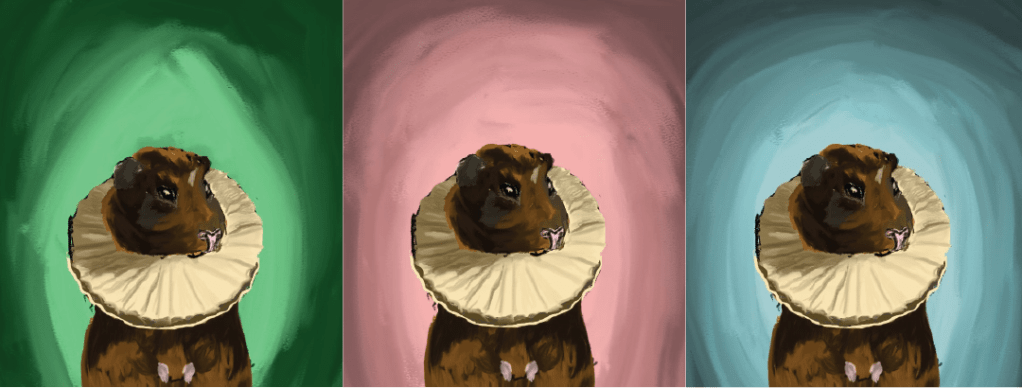
By Mira Sydow | Photos by Mira Sydow
Content warning: animal abuse, child abuse
MOVEMENT I: Orphans as Guinea Pigs
The gate to St. Vincent’s Cemetery looks like it should be locked—rusting, gnarled chain link fence woven with ivy—but it swings open easily. Humps of limestone erupt from grassy ground, weathered like earthbound gargoyles’ hunched backs, smoothed beyond recognition. Scraggly trees pepper the grass and a lone squirrel peeks under the fence, the only signs of life on this desolate plot. In the southwestern corner, a stone cross looms atop a dusty platform, adorned with a statue of Christ overlooking the headstones. At its base, a stone slab stamped with dark letters: ST VINCENT’S SCHOOL 1893.
On a short stretch of the Delaware River in Northeast Philadelphia, sandwiched between a modern waste management plant, the roaring Delaware Expressway, and Quaker City Yacht Club, is all that remains of St. Vincent’s Orphan Asylum. The institution sat on the banks of the Delaware from 1858 to 2021 and housed tens of thousands of Philadelphia’s youth over its 150-year tenure.
In 1908, University of Pennsylvania researchers Samuel McClintock Hamill, Howard Childs Carpenter, and Thomas A. Cope published the results of a tuberculosis study, revealing that they had experimented on 134 residents of St. Vincent’s (which they call “inmates”) and 26 other Philadelphia orphans, all under the age of eight. Seventeen of the children were infants, between three weeks and four months old. Already packed together in “overcrowded” and “overheated” conditions, few children recovered. Many were permanently disabled or died. Some still linger in the corner of St. Vincent’s, their names barely legible in worn limestone, perched atop sets of dates that are too close for comfort.
On a cold Saturday in November, Little Buddies Refuge, one of the only guinea pig rescues in Philadelphia, posted an emergency alert on social media. Over fifty guinea pigs had been abandoned in a dumpster on Milnor Street, between Road King Truck Repair Shop and a stark, gray-and-blue building sitting where St. Vincent’s School once stood. Passersby had rescued around twenty of the pigs, and Little Buddies needed extra volunteers to check out the site before the cold set in.
By the time Armie and I arrived, rosy-cheeked and panting from speed-walking down a side street, all of the living guinea pigs were gone. I’d asked Armie to come because we both needed a pick-me-up and figured that saving a few lives would raise our spirits. They’re a professional dog-sitter/animal whisperer, proving their usefulness by bringing gloves and cautioning me that the bread I bought was too processed for guinea pigs to eat.
We checked a few dumpsters, pinching our noses and poking trash bags to see if they made noise or felt soft. The heel of my boot almost came down on what remained: four cardboard produce boxes tossed onto a grassy patch of ground next to the highway. The first two were empty. In the third, three tiny guinea pig bodies huddled together, fur matted by dirt and grime. Their eyes were open, glassy, blank.
We only found two more, one a few feet down the road, and one a little further up in the overgrowth: both long-haired, tawny-white-black splotched, the kind that you’d see in a pet store.
We walked a hundred feet to the base of the highway and made a few desperate forays into the brush. No more survivors. I forced myself to take in our surroundings, looking anywhere but the ground behind us.
Across the street, a dinky gate wrapped around a tree bent over a few meager headstones. Armie and I drifted towards it.
In 1882, German microbiologist Robert Koch discovered mycobacterium tuberculosis, the bacteria that causes tuberculosis, one of the world’s deadliest diseases at the time. This wasn’t just a defining moment for humanity; it marked the first major scientific breakthrough using experimentation on guinea pigs, which were chosen for their similarity to humans. Koch later discovered tuberculin, the protein that Hamill tested on the children of St. Vincent’s Orphanage.
Over a hundred years later, historian Susan Lederer wrote an essay describing the horror and abuse of the St. Vincent’s tuberculosis experiments. She titled it “ORPHANS AS GUINEA PIGS.” What Lederer perhaps believed was a benign reference to a popular moniker the rodents had earned over the years was actually a deeply historical choice. Reserved as lab animals or toddler pets, the tiny creatures are condemned to, at best, a monotonous life inside a claustrophobic cage. A familiar feeling. In the present day, the spirits of St. Vincent’s children extend a somber welcome to the tiny furry bodies decomposing on the other side of the road. Orphans as guinea pigs. Guinea pigs as orphans.

MOVEMENT II: Piggie Heaven
Emily Otto ushers me through her front door with a bashful smile. I’m forty minutes late to our interview at her home in Mount Airy, where she lives with her mom and a colorful assortment of animals, but for some reason she begins by apologizing to me. The house is a low, modern-looking building at the end of a sloped driveway, somewhere between an enchanted wooded cottage and the Cullens’ house in Twilight. The inside feels more overgrown than the side of the Delaware Expressway, potted plants cluttering wooden shelves, bold prints, and books splayed across every surface.
Emily leads me down a narrow set of cement stairs across from the entryway. Wide enclosures stretch across all four walls of the basement room, littered with heaps of hay, fabric hides, and colorful blankets. Nearly two-dozen sets of eyes peer out from behind cross-hatched gates. Short-haired, long-haired, skinny, chubby, dark-colored, light-colored, inquisitive, and heart-melting fur-potatoes with stubby legs. Familiar sounds: tiny feet shuffling in hay, intermittent squeaks. A familiar smell: thick musk, like burying your nose deep in a dog’s tummy, broken by the sharp scent of fresh-cut vegetables. Atop a supply table in the middle of the room, a small white board reads: Welcome to Little Buddies!
Little Buddies Rescue came about almost by accident during the pandemic—Emily rescued her first guinea pigs, Otis and Nutmeg, in the Spring of 2020 when she was in high school. When Otis passed, she searched for a companion for Nutmeg and recognized the need for a new guinea pig rescue in the Philadelphia area. After three years, Emily still runs the rescue almost entirely single-handedly, and she’s traversed the greater Philadelphia area to rescue hundreds of piggies from precarious conditions.
“I’ve [driven] to crazy places, dangerous areas where I should not be around,” Emily says. She gestures to a jagged mark on her arm. “The fact that that’s all I’ve got, like a lousy scar from a weird dog attack is all that has happened to me is actually shocking.”
On the morning of my visit, she’s already hard at work. Before 9:00 am, she changed the piggies’ hay, spruced up their cages, replenished their food and water, and broke up a fight between Keanu and Reeves, a male bonded guinea pig pair who live in a crate on the far side of the room. Emily explains that it’s pretty common for male piggies to butt heads from time to time, but it’s much safer to house same-gender guinea pigs together—otherwise she’d be drowning in babies.
Floating about the pens, she’s like a real-life Disney princess—kind eyes, sweet smile, and a sixth sense for the needs of her animals—if Disney princesses stopped to pick up a chubby guinea pig and carefully clip their toenails. I scan the room and count fluffy lumps in my head. Twenty-one piggies romping about their cages. Emily says that 13 of them are her personal pets and the others are up for adoption, but you couldn’t tell which are which. She loves them all like her own.
It’s easy to drop into the center of this fluorescent-lit fur-baby haven and idealize a life with your own squeaky companion, but Emily cautions that it’s demanding work. When she started Little Buddies, she didn’t know what she was in for.
“I was definitely ill-prepared, I was 17, I had no idea what I was doing,” she says. But she’s always had trouble turning away piggies in need. Now 21, she’s constructed guidelines for “proper care,” or, she says with a coy smile, “sort of the opposite of what the pet store tells you to do.” As she flits around the room, Emily lays down the basics.
First: Proper facilities. She cringes thinking about pet store guinea pigs condemned to live in claustrophobic tanks. Her piggies live in C&C (cubes and coroplast) cages, constructed from interlocking plastic grids, or MidWest cages—they’re roomier, safer, and cheaper than the kind you’d find at pet stores. She rattles off a list of other necessary amenities: blankets to carpet the crates (hers are from GuineaDad), fresh hay, water bottles, and fabric hideouts for naps and personal time. It’s not just about keeping the piggies alive, she emphasizes, it’s about making them feel safe and loved.
Next: The right companion, or forced abstinence birth control. Emily picks Keanu out of his time-out crate and flips him on his back in her hands. She presses gently around the pink skin of his crotch. “So this is a penis, and right here are the balls. It’s very obvious, right?” Small, pink, and hairless. Definitely obvious.
“Now I’ll show you a female.” She sets down Keanu and scoops up Eloise, a perky black-and-white crested piggie, and holds her tummy-up. “See, she’s got a vagina.” It seems intuitive, but Emily explains that a lot of pet stores get this wrong. Guinea pigs live best in bonded pairs, and if they’re not sexed and separated properly, they could leave an inexperienced owner drowning in pups. The Little Buddies piggies are all separated by gender and companionship. The females are a bit friendlier, so half a dozen of them have free reign of a long enclosure near the entrance, tumbling over each other to nibble at hay or attack my camera.
Finally: The perfect match. Priscilla Murphy is, by Emily’s description, “an older woman who loves older female guinea pigs.” Priscilla’s the dream piggie owner—she has the time, knowledge, and love to dedicate to guinea pigs who have specific needs due to their age or health conditions.
“What people don’t realize—because I don’t think they pay enough attention or spend enough time with the guinea pigs—is that they have definite personalities,” Priscilla says. Flora, her oldest piggie, is endlessly affectionate and runs in frantic circles when she gets excited, but her cage-mate Bertie has a calmer demeanor.
Kayden Jordan, another friend of Little Buddies, can’t help but agree. He met Emily in 2021 after moving from Texas to Philadelphia and adopting a rare bonded trio from a fledgling Little Buddies. Now Kayden takes care of five fosters on behalf of the Emily’s rescue and a couple of his own piggies.
“Pretty much my entire living room is guinea pig cages now. I think it’s about 100 square feet of [enclosures],” Kayden says. Like Priscilla and Emily, he recognizes that Philly’s guinea pig caretaking scene is lackluster.
Actually, “lackluster” feels lenient—the environment in and around Philadelphia is actively hostile to the critters’ survival. Fifty miles away from Little Buddies HQ, tucked between fields of farmland in Borto, Pennsylvania, sits a small animal mill formerly known as Holmes Farm Inc. Holmes made headlines in 2016 after a rigorous PETA investigation revealed over 100 violations of different federal laws pertaining to small animal care. At the time, the farm was one of the largest suppliers of small animals to PetSmart and Petco, who ordered thousands of guinea pigs to stock their stores across the country.
“Petco and Petsmart are both multi billion dollar companies, they don’t care about making sure these guys are good,” Emily says emphatically. “They just kind of hand them out to anyone, and that’s kind of why they end up here.”
Animal mills like Holmes Farm are the reason why, on a brisk fall day, Little Buddies shared that call for help to rescue guinea pigs dumped on the side of the highway under the watchful eyes of St. Vincent’s children. Why a teary Emily, living up to her neck in embattled piggies, made an exception to her newfound attempts to cap her number of rescues. Why, after a two-day search, a handful of tiny bodies remain unrecovered in battered boxes, soaking in the last flickers of each other’s warmth.

MOVEMENT III: Why Do Hamsters Die So Easily?
It’s important for me to romanticize the whole guinea-pig-orphan thing, to pair the squat late-piggies with chubby-faced toddlers and have them waddle off to eternal bliss through my words. To assuage my own guilt, love, and spite at the demise of my own furball spirit guide.
Gustavo arrived at my door at the tail end of winter of 2021, his crate obscured with a fluffy blanket, snuck through the guarded gates to my dorm in the Quad. I was supposed to care for him over spring break, but the girls who delivered him, pledges in Sigma Delta Tau, never came back. Not too keen on their latest Greek ritual, I guess. Through translucent blue plastic and a layer of paper shavings was a snow-white dwarf hamster half the size of my closed fist, fur slick with stress-sweat.
I’m not sure what I needed at the time—my younger sisters, a friend, a roommate, a son, but whatever it was, it sprung to life in the form of an anxious little monster with the tiniest hands you’ve ever seen. For a year and a half, I halved carrots and grapes, broke the bank on Amazon toys and cage extensions, pulled a mission-impossible-level stunt to sneak Gustavo’s cage into my new dorm in the high rises, and fell asleep to the hum of his plastic wheel against the bars of his cage. Soft and low like thunder.
I don’t remember much about his passing, just that it was snowing. Two nights in a row were silent—no familiar shuffling, small creaks of the wheel, no gnawing on the thin, white bars. Just a hamster-sized hole bent between two wires of this shitty, SDT crate that I hadn’t known to replace. Or hadn’t bothered.
On the third day, I learned what had happened: after slipping through the bars of his cage, he traversed a whole flight of stairs to the room below mine. The girls squealed and trapped him in a container, thinking he was a mouse, then flung him down the trash chute—from the 17th floor.
He had a proper funeral. A dozen or so friends and family gathered on the Quad’s outdoor balcony, where he’d squeaked into my life a year and a half prior, bracing against a strong gust and snow flurries. I held his favorite toy, a coconut hide, in numb hands and lit a neon green birthday candle, which faltered in the night breeze. “Nothing lasts forever,” I probably said. “Hamsters less than most.”
Then, maybe I paused.
“But fuck, do I miss him anyway.” It’s almost funny, having so much love for something so small. I think it just felt really good to save something.
A few days after I said my goodbyes, Little Buddies popped up on my Instagram feed—the capitalist machine picked up that I had suffered a cruel loss and offered happy, fluffy piggies as recompense. I online-stalked the shelter for a year before mustering the courage to reach out. Emily had posted a fundraiser for her birthday; she was turning 21, like me.
What I didn’t intend to do was to write Little Buddies’ obituary, or at least, a farewell to the Little Buddies as we know it.
As it happens, dedicating yourself to the care of helpless others takes a massive personal toll. “It’s been too much for a long time,” Emily says. Whether it’s driving to an exotic animal vet in New Jersey at 3:00 am, or slicing up pounds of fresh vegetables daily, she’s “100% responsible in every way for their well being.” And ready to live her life.
Right now, moving on means holding onto her personal piggies, finding good homes for the adoptables, and shifting her focus to creating accessible educational resources for guinea pig owners. Her heart still burns for the bodies discarded across from St. Vincent’s, but she’s finding that Philadelphia’s guinea pig community is slowly growing, and there are other ways she can support them.
Typing with frozen fingers, I message Emily that there weren’t any more survivors. In response, she posted the link to a petition: “Ban guinea pig sales in Pennsylvania—put an end to the needless suffering,” started by Emily Otto. It’s modeled after legislation that passed in New York City earlier this year banning the retail sale of guinea pigs. “The general public are not the ones responsible for these animals, the places that sell them for profit are,” she writes. “These people and innocent animals have been systemically failed.” It’s the first step in a long campaign of advocacy for the furballs bursting with life.
It’s hard for me to think about Emily now without thinking about the limestone garden of St. Vincent’s. The ease of plodding through rows of stone, of dusting grass clippings off headstones, of kneeling to squint at weathered words. Even in this state, I can see the children are taken care of. Some Emily Otto type—endlessly compassionate and fiercely brave—must hunker in the grass to sweep dust off of the headstones, rake the autumn leaves from the weathered ground, and clip the grass to pave the path for weary rescuers, paying their respects to the dead.
 The Woodlands